Blog
Why Parking Lots Are the Most Dangerous Roads You Use

You’re creeping through a packed grocery store lot; eyes locked on a spot near the entrance, when—crunch. Another car just backed right into your door panel. Sound familiar? Parking lot accidents are shockingly common in Washington. While these collisions often happen at low speeds, the resulting headaches, repair bills, and insurance claims can be anything but minor.
Understanding why parking lot collisions happen so frequently, how fault is determined under Washington law, and which car insurance coverages apply is crucial. This guide will walk you through the common causes of parking lot accidents, explain how insurance plays a role, and provide practical steps to protect yourself if an accident occurs.
Key Takeaways
- About one in five reported vehicle accidents happen in parking lots, making a parking lot crash far more likely than most drivers realize.
- Parking lots are usually private property, which means police may not respond, and fault determination relies heavily on your own evidence.
- Washington’s comparative fault principles mean there’s no automatic 50/50 split – insurers base decisions on the specific facts of each incident.
- Your insurance coverage (liability, collision, UMPD, PIP) works the same in a parking lot car accident as it does on public roads.
- Vern Fonk Insurance can help you review your policy, file a claim, or adjust coverage after an accident in a parking lot.
Why So Many Crashes Happen in Parking Lots (Even at Low Speeds)
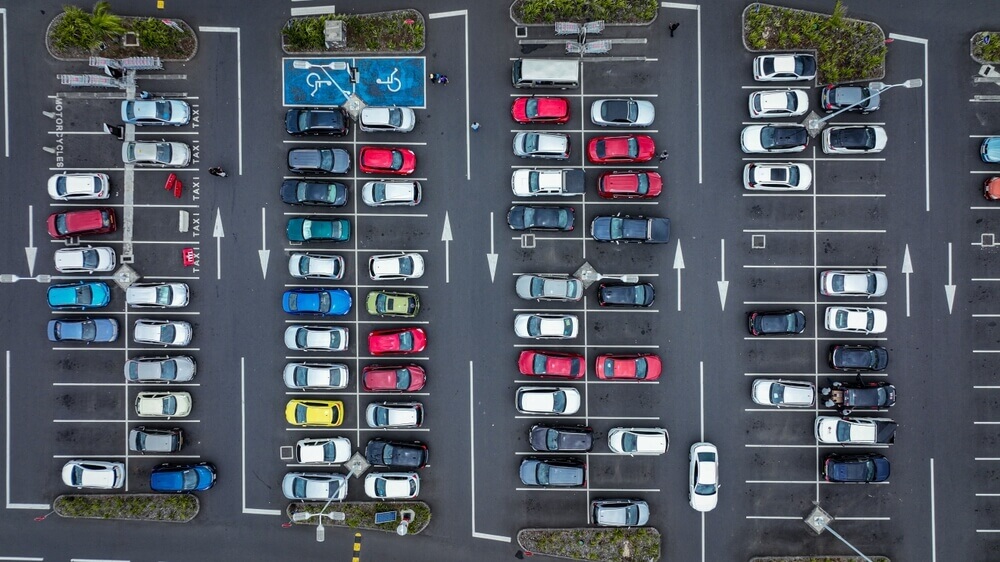
Roughly one in five reported crashes in the U.S. occur in parking lots and garages. That’s a staggering number when you consider most drivers assume these low-speed zones are basically harmless.
The problem? Low speeds create a false sense of security. Most drivers drop their guard – checking phones, fiddling with GPS, or scanning for open spaces – right when they need to be most alert. Parking lots combine moving vehicles, pedestrians, shopping carts, delivery trucks, and children darting between cars, all in tight quarters with frequent blind spots.
Winter weather makes things worse across Washington. Rain in Seattle, snow and ice in Spokane and Yakima – these conditions fade lane markings, reduce traction, and make stop signs and directional arrows harder to see. And while most lot accidents involve property damage only, pedestrian accidents and collisions with cyclists or children can lead to serious injuries and steep medical bills.
Common Types of Parking Lot Accidents
Most accidents in parking lots follow a handful of repeatable patterns. Understanding them helps you see where fault in a parking lot typically falls – and how to avoid becoming part of the pattern.
Two Cars Backing Out at the Same Time
Two cars backing out from opposite spaces collide in the aisle, and both drivers swear the other “came out of nowhere.” When two vehicles reverse simultaneously, both drivers have a legal duty to check that the lane is clear. Insurers often assign shared fault – sometimes close to 50/50 – if evidence is limited. But security footage or witness statements showing one driver was moving faster or not looking can shift the split. Back out slowly, pause at the lane edge, and re-check for cross-traffic.
One Driver Pulling Forward Hits a Backing Vehicle
A driver pulling forward through a lane collides with a vehicle backing out of a parking space. The backing driver generally has less right of way than a car already in the travel lane, so they often bear the majority of fault. However, if the driver pulling forward was speeding, texting, or cutting through empty spaces, insurers may assign shared fault. When photographing the scene, look for skid marks, point of impact, and any lot signage or arrows.
Driver Pulls Out of Space into the Path of a Moving Vehicle
A driver pulls nose first out of a parking spot into a main aisle and gets hit by a car already traveling down that thoroughfare lane. In most cases, the driver entering the lane must yield, so they’re usually primarily at fault. Fault may be adjusted if the through-lane driver was going too fast, ignored a stop sign, or drove against directional arrows. Picture a driver pulling out between large SUVs at a crowded Bellevue mall – obstructed views are a real factor, but they don’t eliminate the duty to yield.
Accidents Involving a Parked Car
A moving vehicle that strikes a legally parked vehicle in a marked parking space is almost always the at fault driver. Washington law requires you to stop and leave your contact and insurance information on the parked car if the owner isn’t present. Failing to do so turns the incident into a hit and run, which carries criminal penalties. If you return to find damage and no note, photograph the parked car’s position, nearby signage, and any paint transfer for your insurer.
Pedestrian Struck in a Parking Lot
A pedestrian struck in a parking lot – whether walking behind a backing car, crossing a travel lane, or stepping between vehicles – faces real danger even at low speeds. Drivers have a heightened duty to watch for pedestrians, so fault often rests primarily with the motorist. That said, comparative fault might still apply if a pedestrian darts out unexpectedly or walks distracted by a phone. PIP coverage and health insurance help cover pedestrian injuries regardless of who’s at fault.
How Washington Law Treats Parking Lot Accidents
Washington is a fault-based state for car accidents, and that system applies to parking lot accidents on private property just as it does to street crashes. But there are a few key differences in practice.
Comparative Fault and “Shared Blame” in Washington
Under RCW 4.22.005, Washington follows pure comparative fault. That means fault can be divided among all drivers involved, and each person’s recovery is reduced by their percentage of responsibility. For example, if one driver was 70% at fault for backing without looking while the other driver was 30% at fault for speeding through a grocery store lot, the speeding driver could still recover 70% of their damages. There is no automatic “50/50” rule for lot accidents – insurers should base percentage splits on evidence and specific vehicle movements. Don’t assume you can’t recover just because you were partially at fault.
Private Property vs. Public Roads
Most parking lots at shopping centers, office parks, and apartment complexes are privately owned. Police in cities like Seattle, Everett, and Spokane may decline to respond to minor fender benders on private lots, which makes self-documentation critical. Criminal laws such as DUI and hit-and-run still apply, but officers are less likely to issue typical failure-to-yield tickets. Without a citation, your insurance company relies more heavily on photos, statements, and security footage to determine fault.
When Property Owners May Share Fault
Sometimes the property owner or manager shares responsibility. Missing stop signs, confusing or faded lane markings, potholes, or inadequate lighting in high-traffic areas can all contribute to a collision. Imagine a poorly lit apartment complex lot in Kent where a driver can’t see a pedestrian because of broken lights and overgrown landscaping – a dangerous design contributed to that accident. These situations typically involve premises liability claims against the property owner’s liability insurance. Premises liability law allows injured people to seek compensation from parking lot owners or a government entity responsible for lot maintenance. Consulting with a law firm experienced in such cases may be worthwhile if dangerous conditions play a role.
Determining Fault in a Parking Lot Accident
Fault determination in parking lots comes down to what each vehicle and pedestrian was doing in the seconds before impact. Insurers look at right of way rules, speeds, visibility, distractions, and whether each driver took reasonable steps to avoid a collision.
Right-of-Way Rules Inside Parking Lots
Major thoroughfare lanes running along storefronts generally have the right of way over smaller feeder lanes and parked-car aisles. Drivers pulling out of spaces or side aisles must yield to other cars already moving in the main lane. Traffic signs, painted arrows, yield signs, and crosswalks inside parking lots matter for fault, even if police don’t enforce them. A driver ignoring an internal stop sign in a Washington Target lot and causing a collision will typically be found mostly at fault.
Evidence Insurers Use to Determine Fault
To prove fault, insurers rely on:
- Smartphone photos of damage, license plates, and the scene
- Dashcam or security footage showing vehicle movement and timing
- Witness statements from bystanders or store employees
- Damage patterns (bumper vs. quarter-panel impacts reveal direction of travel)
- Lane markings, arrows, and signage visible in photos
When two drivers tell conflicting stories and evidence is thin, insurers may default to shared fault – which affects deductibles and premium changes for both. Taking a few extra minutes to gather evidence at the scene saves real money later.
How Parking Lot Accidents Affect Your Insurance
Parking lot accidents are treated as “real” traffic accidents by insurers – low speed doesn’t mean low consequences for your claim history.
Which Coverages Typically Apply
| Coverage | What It Pays For |
| Liability coverage | Damage and injuries you cause to others when you’re at fault |
| Collision coverage | Repairs to your own vehicle after a crash, regardless of fault (minus deductible) |
| UMPD | Your vehicle damage when the other driver is uninsured or flees the scene |
| PIP / MedPay | Medical costs and partial lost wages for you and passengers, regardless of fault |
If you’re unsure whether you have full coverage, now is the time to check – before you need it.
Premiums, Deductibles, and Claim History
At-fault parking lot accidents can increase future premiums, just like other at-fault crashes. When fault is shared or unclear, some insurers still record the claim on both drivers’ records. For very minor vehicle damage that falls near your deductible, it may cost less to pay out of pocket than to file a claim. Talk with a Vern Fonk Insurance agent before deciding – the math depends on your own policy and claim history.
When the Other Driver Denies Fault or Leaves the Scene
It’s common for the other driver to blame you, refuse to share insurance information, or simply drive off. When stories conflict, objective evidence like photos and surveillance footage becomes critical. If a negligent driver causes damage to your parked car and leaves without a note, you may need your collision or UMPD coverage. If you’ve been hit by an uninsured driver, contact Vern Fonk right away to review your options.
What to Do Immediately After a Parking Lot Accident
Here’s a practical checklist for the first 30–60 minutes after a crash. These steps protect your safety, preserve your legal rights, and improve the outcome of insurance claims – even without police involvement.
Check for Injuries and Call 911 if Needed
Check yourself, passengers, and anyone else for injuries. Neck, back, and head pain can show up hours after a low-speed collision, so don’t dismiss symptoms. Call 911 immediately if anyone appears hurt, if a dispute turns aggressive, or if moving vehicles are blocking a busy area. Paramedics can document injuries – useful for both medical treatment and any claim for lost wages or medical bills.
Move to a Safe Area and Exchange Information
If both cars are drivable, move them out of active lanes to prevent secondary crashes. Exchange this information with the other driver:
- Full name, phone number, address
- Insurance company name and policy number
- Driver’s license number
- Vehicle make, model, year, and license plate
Stay calm. Don’t admit fault or apologize in ways that could be misinterpreted. If a pedestrian or passenger reports significant injuries, get their contact details too.
Document the Scene Thoroughly
Take multiple photos: wide shots of both cars, close-ups of property damage, skid marks, license plates, lane markings, stop signs, arrows, and any visual obstructions. Note the exact time, weather, poor lighting conditions, and which parking lot you were in (“Costco, Lynnwood, WA, 6:15 p.m., rainy”). Ask bystanders for their names and phone numbers. Ask the business or property manager whether security cameras cover the area and request that footage be preserved.
Notify Your Insurance Company and Consider Legal Advice
Most auto policies require prompt reporting of any accident, including those on private lots. Vern Fonk Insurance customers can call their local Washington office for guidance on coverage, deductibles, and whether filing a claim makes sense. If there are serious injuries, hotly disputed fault, or potential premises liability against a property owner, consider a free consultation with a personal injury attorney. Avoid giving recorded statements to another driver’s insurer until you understand your rights.
You may also want to read: How to Prevent Higher Rates After an Accident
Practical Tips to Avoid Parking Lot Accidents
Prevention beats paperwork every time. Here are habits you can adopt immediately.
Slow Down and Avoid Aggressive Parking
Drive at walking speed near store entrances, cart returns, and apartment mailboxes. Resist the urge to race another driver for the same parking space or cut diagonally across rows. Choose spaces slightly farther from entrances where congestion is lower. Use turn signals clearly so other cars can anticipate your path.
Use Mirrors, Cameras, and Good Positioning
Fully adjust mirrors and use backup cameras as aids – not substitutes – for turning your head. Back into your parking spot when possible so leaving later means pulling forward with better visibility. Parking sensors may miss fast-moving pedestrians or bicycles, so take an extra pause before entering the travel lane.
Watch for Pedestrians and Small Children
Children are often below mirror level and can dart away from parents in grocery stores and school lots. Scan under and between other cars for moving feet or shadows. Slow to a crawl near crosswalks, cart corrals, and store entrances. Save the GPS programming, music browsing, and texts for after your car is fully parked and turned off.
How Vern Fonk Insurance Helps Washington Drivers After a Parking Lot Accident
Vern Fonk Insurance is a Washington-based independent agency that works with multiple carriers to find the right fit for your situation. Whether you need to review your auto insurance coverage, adjust collision and liability limits, or navigate a claim after a parking lot accident, we’re here to help. We’re especially experienced with high-risk and SR-22 drivers who can’t afford another coverage gap.
Give us a call at (800) 455-8276, request your free online quote, or visit your local Vern Fonk office to make sure your policy is ready before the next parking lot surprise.
FAQs About Parking Lot Accidents in Washington
Does a parking lot accident go on my driving record in Washington?
Parking lot accidents do not automatically appear on your Washington driving record unless they involve a traffic citation, criminal charge, or reportable injury. However, your insurance company may still record the claim internally and consider it when renewing your policy. If you are found at fault in a parking lot accident, this can influence your insurance premiums, especially if you have multiple recent claims. A Vern Fonk agent can help you understand how a specific claim might affect your premium and provide guidance tailored to your situation.
Are parking lot accidents always treated as 50/50 by insurance companies?
No, there is no automatic 50/50 rule for parking lot accidents. Fault is determined based on the specific facts of each case, such as who had the right of way, who was distracted, and what evidence is available. Insurance companies may propose a shared fault split when evidence is limited or when both vehicles are backing out simultaneously. Providing strong photographic evidence, witness statements, and camera footage can help prevent an unfair, equal fault assignment. It is important to present all available evidence and challenge any proposed fault percentages with which you disagree.
Should I call the police after a minor parking lot accident?
It is generally advisable to call the non-emergency police number if there is visible damage, a disagreement over fault, or potential injuries. Police officers may decline to write a full report for collisions on private property, especially if no one is hurt. Even if the police do not respond, you should still exchange information with the other party, document the scene thoroughly, and report the accident to your insurance company. In cases involving serious injuries or damage exceeding Washington’s reporting threshold, having a formal police report supports both insurance claims and any potential legal actions.
What if I’m hit by an uninsured driver in a parking lot?
If you are hit by an uninsured driver in a parking lot, your own insurance policy may provide coverage through uninsured motorist property damage (UMPD), collision coverage, or personal injury protection (PIP), depending on the coverage you carry. It is important to collect as much information as possible at the scene, as false information and hit-and-run situations complicate the claims process. A Vern Fonk agent can review your policy to confirm the protections you have and advise whether adding UMPD coverage would be beneficial in the future. Promptly reporting the incident helps preserve your rights under Washington law.
Can my landlord or a business be responsible if lot conditions caused the crash?
Yes, a property owner or manager may share liability if dangerous conditions such as broken lights, large potholes, or missing stop signs contributed to the collision. These claims fall under premises liability and involve the responsible party’s commercial liability insurance. It is important to document hazardous conditions with photos that clearly show how these factors affected visibility, traction, or right of way. Discussing these cases with a Washington personal injury attorney can be helpful, but you should also report the accident to your auto insurer through Vern Fonk to ensure your claim is properly handled.
Related Articles
-

“My Friend Was Driving!” The Truth About Permissive Use in Washington Auto Policies
-September 23rd 2026So, your buddy needed to “borrow your car real quick,” and you said, “Sure, just don’t crash[...]
Read more -
What Happens If Your Car Is Hit While Parked on a Ferry?
-August 28th 2026For many Washington drivers, ferry travel is a regular part of commuting, visiting family, or exploring the[...]
Read more -
The PNW Outdoor Adventure Insurance Checklist: Cars, Bikes, Boats, Campers, and Gear
-August 25th 2026The Pacific Northwest is a playground for outdoor enthusiasts, but every kayak strapped to a roof rack,[...]
Read more