Blog
Does Car Insurance Cover Damage While Your Car Is Being Towed?

Yes, car insurance may cover damage that happens while your car is being towed, but not every policy or type of damage qualifies. Collision coverage might help after an impact, while some non-collision losses may fall under comprehensive coverage. The towing company may also be responsible if its handling damaged your vehicle. What happened, and what you can prove, matters.
You call for a tow because your car is already having a bad day. Then you pick it up and discover a scraped bumper, a bent wheel, or a new noise that definitely wasn’t there before. Fantastic. Now your car has a second problem, and you’re left wondering who’s supposed to pay for it.
Before the blame game starts, grab your photos and paperwork. A fresh dent doesn’t tell the whole story by itself, and neither does the towing company’s assurance that everything went smoothly. Here’s how to sort out responsibility, check your insurance, and take the next step without guessing.
Who Pays If a Tow Truck Damages Your Car?
The towing company could be responsible when its driver, equipment, or storage practices cause damage. But noticing a problem after the tow isn’t quite the same as proving it happened during the tow. Photos, a vehicle condition report, and a mechanic’s findings can help connect the dots.
Say a tow truck driver pulls your all-wheel-drive vehicle with the wrong wheels on the road, contrary to the manufacturer’s instructions. The drivetrain starts acting up afterward. That timing is worth investigating, but a repair shop’s assessment and the tow records will make a stronger case than “it was fine yesterday.”
There can be more than one incident in the story, too. If another driver hit your parked car before it was towed, consider the original crash damage and any later towing damage separately. And if a property manager ordered an impound, whether the tow was authorized is a different issue from whether the truck damaged your car.
Washington has specific rules for registered tow truck operators. Under RCW 46.55.030, operators must carry certain liability insurance, including protection related to vehicles in their custody. That requirement doesn’t automatically prove fault or guarantee a particular claim will be paid.
What Kind of Damage Can a Tow Cause?
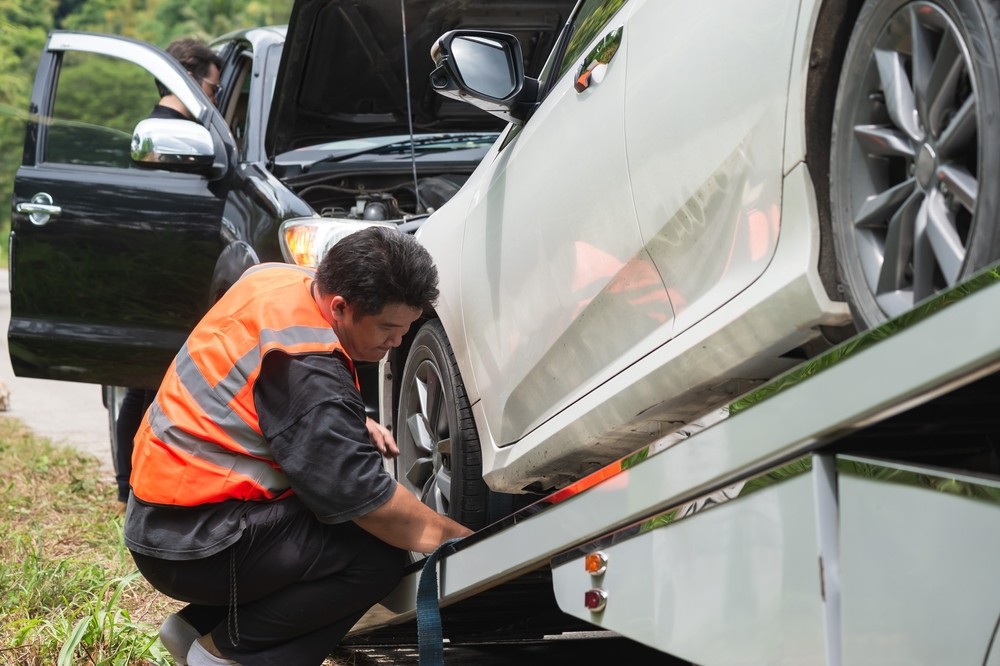
Some damage is hard to miss: a bumper gouged by a ramp, a mirror knocked loose, or a fresh scrape along the side. Other trouble shows up later, especially when a tire, wheel, undercarriage, transmission, or drivetrain takes a hit.
Flatbeds carry the vehicle off the road; wheel-lift trucks leave some wheels rolling. Neither is automatically the problem. The safe towing method depends on the vehicle, whether it can roll freely, and what its manufacturer recommends. An electric parking brake or all-wheel drive can make those details especially important.
Does Your Auto Insurance Pay for Towing Damage?
Maybe. The key question isn’t simply “Was my car on a tow truck?” It’s “What actually caused the damage?” Your policy covers specific kinds of losses, and towing assistance doesn’t automatically cover repairs.
For example, collision insurance may apply if the car falls from the truck or hits something during transport, depending on the policy and circumstances. Comprehensive coverage may apply to certain covered non-collision events, such as a vehicle stolen from a storage lot. A damaged transmission caused by improper towing is a trickier situation: mechanical-damage exclusions and the operator’s possible responsibility both need a closer look.
Here’s a quick way to think about the possible claim paths. These are starting points for questions, not promises of payment.
| What Happened | What to Check |
| Your car falls off a tow truck | Collision coverage and a possible claim against the tow operator |
| The tow damages your drivetrain | Possible operator responsibility; policy exclusions for mechanical damage |
| Your car is stolen from the storage lot | Comprehensive coverage if carried, plus possible operator responsibility |
| Another vehicle hits the tow truck | Coverage tied to that crash, potentially including collision |
| You have liability-only insurance | Your own liability coverage generally won’t pay to repair your car |
And if somebody tells you that you have “full coverage,” don’t treat that as an answer on its own. Full coverage isn’t a standardized promise that every accident, breakdown, or tow-related problem will be paid for. You need to know which coverage you actually bought.
In Washington, the required car insurance is mainly about liability for covered injuries or damage you cause to other people. It doesn’t automatically pay to fix your own vehicle after towing damage.
Will You Have a Deductible or Higher Insurance Rates?
If you use your own collision or comprehensive coverage, a deductible will generally apply. A claim against the towing company’s liability insurance may follow a different process without your own policy deductible. Your insurance company might later try to recover its payment from whoever was responsible, a process called subrogation. Getting your deductible back isn’t guaranteed.
And no, one towing-damage claim doesn’t automatically mean your premium is headed for the moon. How a claim affects your car insurance rates depends on your insurance company, what happened, and applicable rules. Ask about the likely impact rather than assuming the worst.
What Should You Do When You Find Damage After a Tow?
Your first instinct might be to call the towing company and demand answers. Fair enough. But first, collect the kind of evidence that can speak for you later, especially if the company remembers the tow differently.
- Check the Car Before Driving Away: Take wide photos and close-ups of the damage, and record when and where you found it. If it might be unsafe to drive, have it inspected.
- Keep the Tow Paperwork: Save the receipt, impound notice or authorization, operator name, lot address, and any condition report.
- Look for Before-the-Tow Evidence: Earlier photos, dashcam clips, accessible security footage, and repair records may help show what changed.
- Put Your Complaint in Writing: Describe what you noticed, ask about the company’s claim process and insurance information, and avoid guessing what the cause was.
- Notify Your Insurance Company Promptly: Ask what coverage might apply and what the claims team needs, even if you’re still sorting out who caused the damage.
- Get a Written Inspection or Repair Estimate: Ask the shop to describe the damage and whether it appears consistent with the towing method, if the mechanic can reasonably assess that.
If your car is still at the impound lot, ask about the release process as soon as possible. Storage fees may continue to add up while the dispute is being resolved. Before moving your vehicle, take photos of its condition and keep copies of any paperwork.
How Do You File a Claim for Tow Truck Damage?
You can report the damage to the tow-operator, your insurance company, or both. The two paths aren’t necessarily an either-or choice while the facts are under review, but you can’t collect payment twice for the same loss.
Start With the Towing Company
Send the tow date, photos, paperwork, and a short description of the damage. Include an estimate if you have one. Ask how the company accepts claims, whether it has opened an incident report, and who will respond. Save the emails and claim number. And before signing anything labeled “final release,” read what rights you’d be giving up.
Ask Your Own Insurance Company About Coverage
If your policy might cover the loss, contact the claims department for the insurance company that issued it. Vern Fonk’s file-a-claim page can help you find the appropriate contact. An agent can help you understand your options, but the insurance company investigates and decides claims.
Now’s a good time to read your insurance policy for deductibles, exclusions, and notice requirements. Don’t confuse the deadline to report a claim with the much longer period that may apply to filing a lawsuit.
The Washington Office of the Insurance Commissioner says the time available to file an auto claim varies by insurance company and policy. Its consumer guidance also describes claim-handling rights and storage or towing fee issues. Reporting the loss promptly gives everyone a clearer starting point.
What If the Towing Company Says It Wasn’t Their Fault?
If the towing company denies responsibility, ask for a written explanation of its decision and the evidence used to reach it. Compare that information with your photos, repair estimate, and any vehicle condition reports completed before the tow. This can help you determine whether you have grounds to dispute the decision.
You can request a supervisor’s review, and your own insurance company may investigate if applicable coverage exists. Washington also has a Department of Licensing complaint process for certain issues involving registered tow operators. A regulatory complaint, though, isn’t the same thing as a check for your repairs.
If you’re fighting an impound itself, look into the separate procedures for challenging whether it was authorized. A questionable tow order doesn’t automatically prove towing damage, and damage during an authorized tow is still possible.
For civil lawsuits involving injury to personal property, Washington RCW 4.16.080 generally provides a three-year period. Facts and procedures can affect deadlines, so don’t treat that as extra time to notify your insurance company. For a substantial dispute, consider getting legal advice.
How Can You Lower the Risk of Damage Next Time?
Nobody schedules a breakdown because it sounds fun. But if you can choose the towing service, a quick conversation with the dispatcher can prevent some expensive misunderstandings.
- Give the dispatcher your car’s make, model, and drivetrain, including whether it’s all-wheel drive.
- Mention low clearance, locked wheels, an electronic parking brake, or damage that makes the car hard to move.
- Ask whether the driver can use the towing procedure recommended by the manufacturer.
- Take photos before loading, but only when you can do it safely.
If you’re stranded beside fast-moving traffic, forget the photo shoot. Get somewhere safe first. The car can be inspected once you’re out of danger.
Towing Damage: Key Takeaways
Finding new damage after a tow is annoying enough. The useful question is what caused it, because that’s what points you toward the right claim.
- A tow operator may be responsible if its handling or storage caused the damage, but you’ll need supporting evidence.
- Collision and comprehensive coverage may help with different kinds of losses; roadside assistance doesn’t automatically cover vehicle repairs.
- Photos, tow records, and a mechanic’s assessment can make it easier to show what happened.
- Reporting the problem promptly, asking about deductibles, and keeping insurance claim deadlines separate from lawsuit deadlines can help.
Get a Better Look at Your Auto Insurance With Vern Fonk
A tow truck is supposed to solve one car problem, not give you a bonus problem to take home. While Vern Fonk can’t decide who damaged your car or approve a claim, our agents can help you look at the auto insurance options available for the road ahead.
At Vern Fonk, we’re here to help you explore auto insurance options and find coverage that fits your needs. Get an auto insurance quote online, give us a call at (800) 455-8276, or stop by a Vern Fonk location to chat with one of our friendly agents.
FAQs About Towing Damage
Can a tow-yard keep charging storage fees during a dispute?
Charges may continue while the disagreement is unresolved, depending on the type of tow and applicable rules. Ask for an itemized bill and the release procedure right away.
What if you find the damage days later?
Report it as soon as you notice it. Take photos, save the tow receipt, and get a mechanic’s findings in writing. Earlier pictures and records become especially useful when there’s a delay.
What if something is missing from inside your car?
Report missing items to the tow yard and, if you suspect theft, law enforcement. Comprehensive auto coverage generally protects the vehicle against covered theft, not ordinary personal belongings inside it. Homeowners or renters coverage may be relevant, subject to the policy.
Can you pick your own repair shop?
You can generally request a shop you trust, though an insurance company may have inspection, estimating, or payment requirements. Ask about those details before authorizing major repairs.
Sources
Related Articles
-

What Happens If Your Car Is Damaged in a Car Wash?
-November 17th 2026If your car gets damaged at a car wash, take photos, tell the manager, and hang on[...]
Read more -
Can You Get Car Insurance Without a License in Washington?
-October 29th 2026Can you get car insurance without a driver’s license in Washington? In some situations, yes. You may[...]
Read more -
“My Friend Was Driving!” The Truth About Permissive Use in Washington Auto Policies
-September 23rd 2026So, your buddy needed to “borrow your car real quick,” and you said, “Sure, just don’t crash[...]
Read more